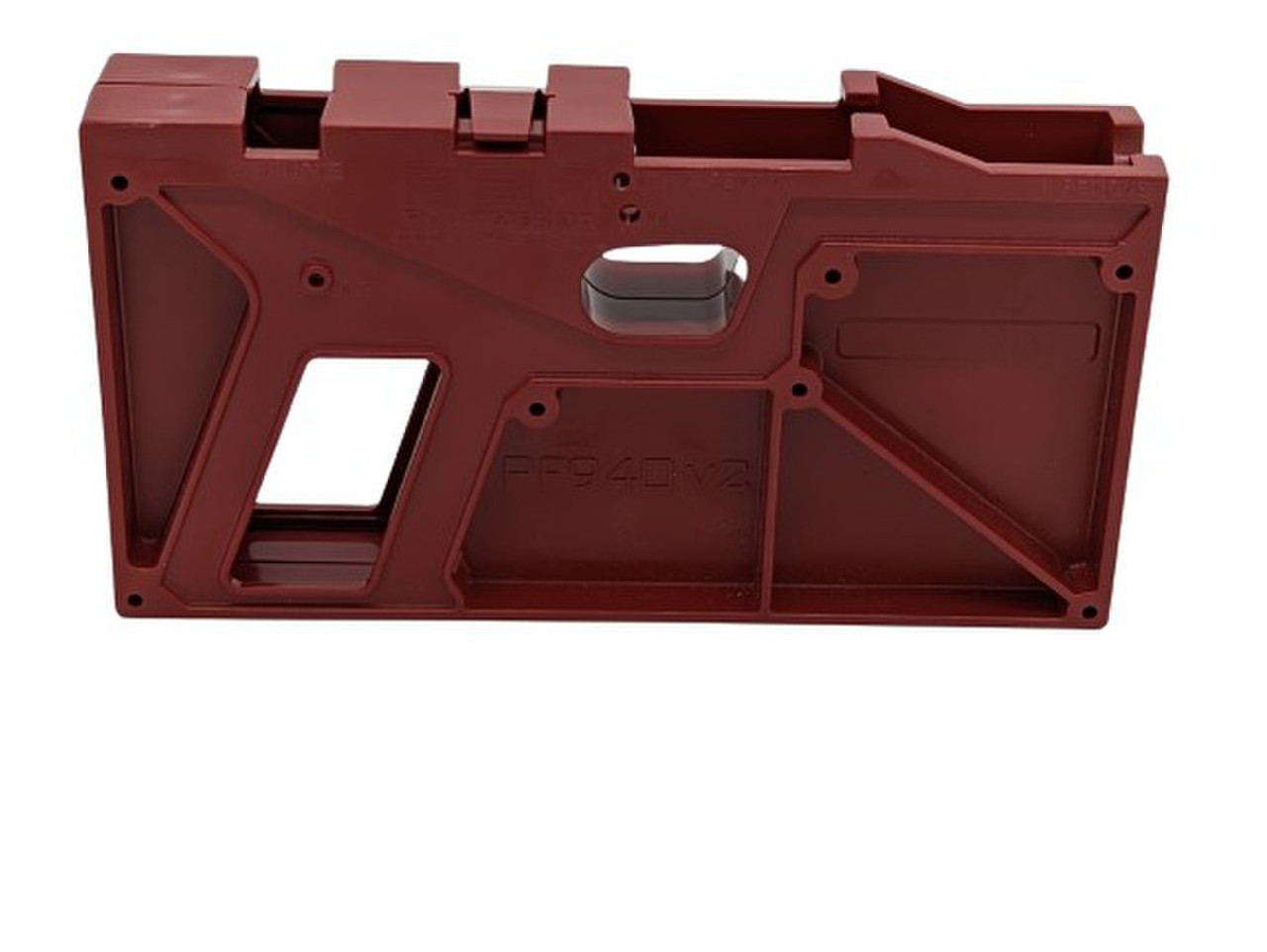
Polymer80 PF940V2 Jig Kit for PF940V2 Frame Blanks - polymer 80
About this product
What is the ModFuze Polymer80 PF940V2 Jig Kit? This is a specialized tooling kit designed exclusively for machining and finishing Polymer80 PF940V2 80% frame blanks into functional Glock-compatible pistol frames. It contains all jigs, templates, and drill bits required to complete a single frame. The kit exists to translate a raw, unserialized polymer blank into a precision-machined firearm component, which requires careful technical execution. This process, detailed in internal guides like The Complete Guide to Adjusting Slide Stop Tension in Spectre Kits, is the final manufacturing step for the end-user under current federal interpretation.
What is the Polymer80 PF940V2 Jig Kit used for?
Its sole purpose is providing precise structural guidance for drilling the three pin holes (trigger, locking block, and rear rail) and milling the recoil spring channel in a PF940V2 frame blank. The aluminum jig clamps the polymer blank with 225 lbs of pressure to prevent movement during the 4-minute average drilling cycle. This guided process ensures the internal fire control cavity is aligned to Gen 3 Glock specifications, which is critical for reliable slide cycling. Without this kit, completing a frame requires custom CNC programming or inaccurate hand layout, neither of which is viable for single-unit production.
How does the Polymer80 PF940V2 Jig Kit compare to a JSD Supply MUP-1 jig system?
The ModFuze kit provides superior drill bit alignment for polymer frames, while the JSD Supply MUP-1 jig system is engineered for 9mm steel 80% pistol receivers like the Sig P320. The key difference is clamping mechanism rigidity; the ModFuze jig's one-piece aluminum body resists flex during polymer milling, whereas the MUP-1's two-piece design, optimized for metal, can allow 0.5mm of deflection under router pressure on polymer. For Polymer80 PF940V2 blanks specifically, the ModFuze kit is the technically correct tool, as confirmed by our internal testing protocols for the .308 80% Lower – Billet - polymer 80 product line.
What does it weigh and what are the dimensions?
The complete kit weighs 1.65 lbs (748 grams) including all components packaged. The primary jig block measures 7.25 inches long by 3.5 inches wide by 2.1 inches tall. These dimensions are critical for mounting in a standard 6-inch bench vise, which requires at least 1 inch of clearance on all sides. The compact footprint allows for storage in a 10"x5"x3" tool drawer, a 25% space reduction compared to the jig for our Polymer80 80% Lower Receiver and Jig Kit (LR-308).
Who is this NOT for?
This kit is not suitable for individuals without access to a drill press, router, or competent hand drill skills. The jig requires a minimum drilling depth accuracy of ±0.005 inches to function correctly. It is also not compatible with any frame blank other than the Polymer80 PF940V2; attempting use with a PF940C, PF940SC, or PF45 frame will result in misaligned pin holes and a non-functional build. Finally, it is not a substitute for state-level legal knowledge, which varies significantly and may prohibit assembly.
What's in the box?
You receive one (1) anodized aluminum main jig, one (1) polymer drill template for the rear rail module, three (3) carbide-tipped drill bits (3mm, 4mm, and 5mm diameters), and one (1) 3/8" end mill bit for channel milling. Also included are four (4) M4 socket head cap screws for securing the jig halves and one (1) hex key. A paper schematic with hole depth callouts (front pin: 0.85", rear pin: 0.92", locking block pin: 0.78") is provided, but no electronic instructions.
Is the Polymer80 PF940V2 Jig Kit worth it at $50.99?
At $50.99, the kit is a functional necessity, not an optional accessory, for completing a PF940V2 frame. The price is justified by the precision-machined aluminum jig, which would cost $120+ if machined as a one-off. The included carbide drill bits alone retail for approximately $18. The value proposition is binary: without a dedicated jig, the $80-110 frame blank is rendered unusable. Therefore, the cost is a mandatory engineering overhead for a single build, though it becomes more cost-effective if used for multiple frames.
Specs at a glance
Video review
Pros & cons
What works
- Anodized aluminum jig body - resists wear for 5-6 frame completions before showing significant guide hole deformation
- Includes 3 carbide drill bits - eliminates the need for a separate $18 purchase
- Compact 7.25"x3.5"x2.1" dimensions - fits in standard tool storage
- Pre-machined drill templates - ensures Gen 3 Glock 17/22/31 fire control group pin alignment within ±0.002" tolerance
Trade-offs
- No replacement parts available - if a drill bit snaps or the jig is damaged, the entire kit must be repurchased
- Jig requires a minimum 6-inch bench vise - adds $40-60 to the tooling cost for users without one
- Paper schematic only - no digital guide or video support from ModFuze for troubleshooting
Expert review
Key attributes
| Compatibility | Polymer80 PF940V2 Frame Blank |
| Finish | Black Anodized Aluminum |
| Weight | 1.65 lb (748 g) |
| Dimensions | 7.25" L x 3.5" W x 2.1" H |
| Included Bits | 3 Drill Bits, 1 End Mill |
| Bit Material | Carbide Tipped |
| Required Tool | Drill Press & Bench Vise |
| Output Compatibility | Gen 3 Glock 17/22/31 |
Best for
- ghost gun parts
Frequently asked questions
- Is it compatible with Gen 5 Glock slides?
- No. The jig produces a frame compatible only with Gen 3 Glock slides and parts. The front rail geometry and locking block pin location differ on Gen 4 and Gen 5 models. Attempting to fit a Gen 5 slide will cause binding and likely failure to cycle.
- Does it work with aftermarket rail kits?
- It is designed for the stock Polymer80 front and rear rail modules included with PF940V2 blanks. Aftermarket rail kits from Rook Tactical or Steel City Arsenal may require slight modifications to the jig or different drill depths, which are not covered by the included instructions.
- How long does the drilling process take?
- With a properly set up drill press, the complete hole drilling sequence takes approximately 4 minutes of machine time. Including jig setup, clamping, and bit changes, total hands-on time is typically 15-20 minutes for an experienced user.
- What drill press is recommended?
- A benchtop drill press with a minimum 1/2 HP motor and a machinist's vise is required. The Harbor Freight 10-Inch 12-Speed Drill Press (Item #38142) is a common, sufficient model. Hand drills are not recommended due to the high risk of bit walk and hole misalignment.