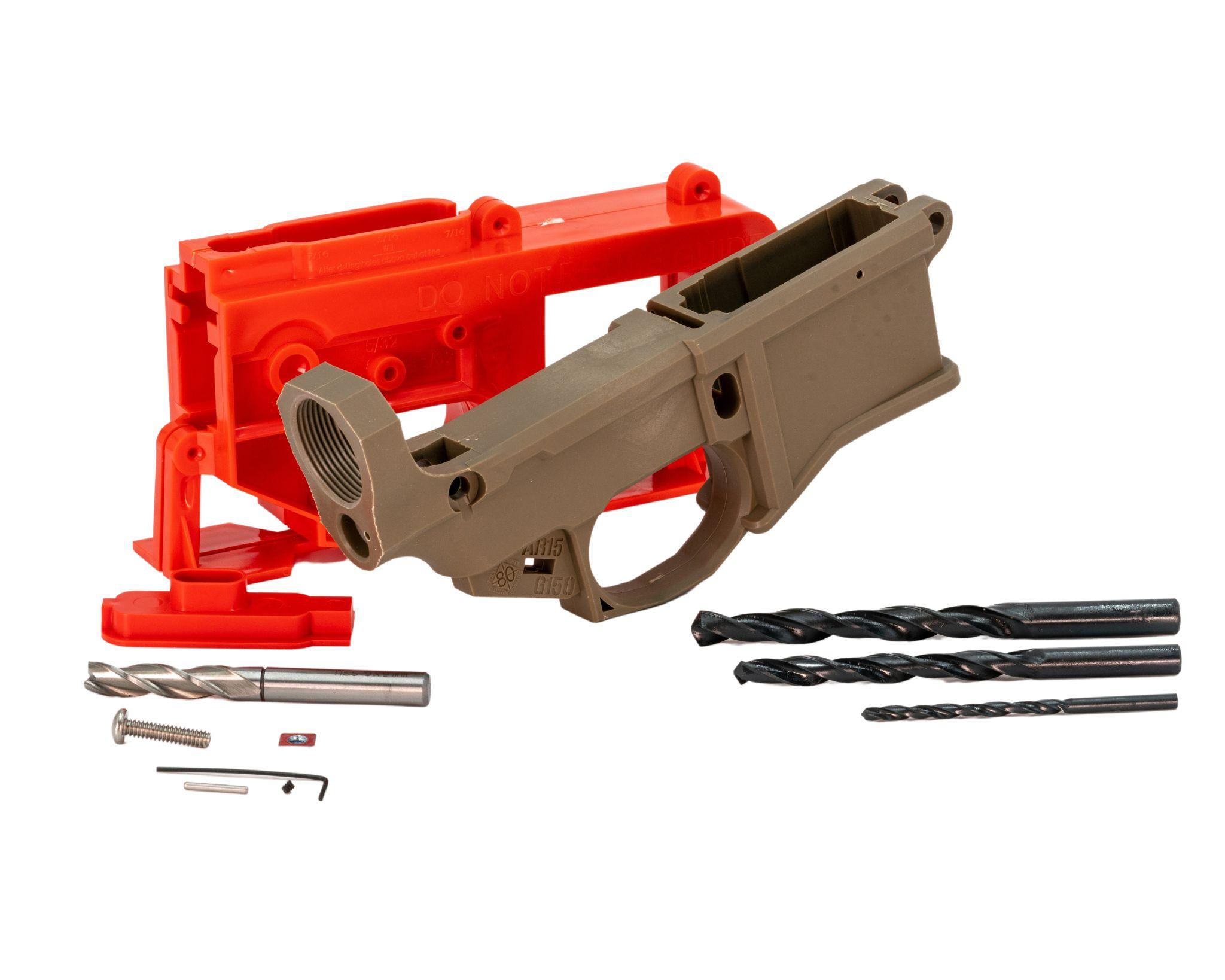
P80 G150 AR-15 80% Receiver Kit – Flat Dark Earth - polymer 80
About this product
The Polymer80 G150 AR-15 80% Receiver Kit is a Flat Dark Earth, polymer-based lower receiver and jig system that requires user completion to make a functional firearm. This specific Phoenix2 system kit provides the foundational component for an AR-15 build. It falls under US federal regulations defining an unfinished receiver, which carries specific legal responsibilities for the end-user.
What is the Polymer80 G150 AR-15 80% Receiver Kit used for?
The P80 G150 kit is used for constructing a personalized AR-15 rifle lower receiver from an incomplete component. You will need to perform the final machining steps using the included jig and your own tools to create the fire control group pocket and trigger/hammer pin holes. This process creates a unique, unserialized firearm component, provided you comply with all state and federal laws regarding manufacturing for personal use.
How does the Polymer80 G150 compare to the ModFuze .308 80% Lower – Billet?
The G150 polymer kit is a lighter, more cost-effective entry point for a standard AR-15 platform compared to a billet aluminum lower like the ModFuze .308 80% Lower. The Polymer80 kit weighs approximately 7.8 oz and costs $79.00, while a billet .308 lower typically weighs over 20 oz and costs significantly more. The polymer G150 is better for a lightweight 5.56/.223 build, whereas the billet .308 is superior for handling the pressure and weight of a large-frame AR-10 platform.
What does it weigh and what are the dimensions?
The G150 polymer receiver blank weighs 7.8 oz. Its external dimensions are 9.1 inches long, 2.4 inches tall at the buffer tube tower, and 1.2 inches wide at the magwell. The polymer construction accounts for over 60% of the weight savings compared to a standard forged aluminum lower receiver. The internal pocket dimensions require removal of approximately 1.5 cubic inches of material using the provided jig as a guide.
Who is this NOT for?
This kit is not for anyone prohibited from owning a firearm, unwilling to invest in proper machining tools and drill bits, or living in a jurisdiction where manufacturing an unserialized firearm is illegal. It is also not suitable for builders seeking a metal receiver for heavy-use or specialized competition builds where extreme rigidity is required; those users should consider a billet or forged aluminum option.
What's in the box?
The box contains the G150 80% polymer lower receiver in Flat Dark Earth, the multi-piece Phoenix2 drill/mill jig system, and the necessary jig hardware and drill bushings. You receive one receiver, one complete jig set, six specific drill bushings for trigger and hammer pin locations, and the securing bolts. You must supply your own drill press or router, vice, 3/8" and 5/16" drill bits, and end mill.
Is the Polymer80 G150 worth it at $79.00?
At $79.00, the G150 kit is worth it for a builder focused on a budget-conscious, lightweight AR-15 project who understands and accepts the limitations of polymer. The cost is roughly one-third that of a completed, serialized aluminum lower, representing direct savings for the labor you perform. For a higher-durability build or if your state requires serialization upon completion, the savings may not justify the material trade-offs.
Specs at a glance
Video review
Pros & cons
What works
- Weighs 7.8 oz — 60% lighter than a standard forged aluminum lower.
- Phoenix2 jig system provides clear indexing for 3 critical drilling operations.
- Flat Dark Earth color is molded-in, not coated, so it won't wear or chip off.
- Costs $79.00 — a direct savings versus a completed, serialized receiver.
Trade-offs
- Polymer material has lower long-term wear resistance at stress points (e.g., buffer tube threads) versus aluminum.
- No fire/safe markings engraved — not compliant for builds in some states without additional laser engraving.
- Requires significant tool investment (drill press/router, vice, bits) — adds $150+ to true project cost.
Expert review
Key attributes
| Model | G150 |
| Firearm Platform | AR-15 |
| Completion Status | 80% Receiver |
| Material | Polymer |
| Color | Flat Dark Earth |
| System | Phoenix2 Jig System |
| Weight | 7.8 oz |
| Includes Jig | Yes |
Specifications
| model | G150 |
| firearm_type | AR-15 |
| completion_status | 80% receiver |
| color | Flat Dark Earth |
| brand | Polymer80 |
| system | Phoenix2 |
Materials
- polymer
What's in the box
- AR15 80% Lower
- Jig System
Frequently asked questions
- Is it compatible with standard AR-15 parts kits?
- Yes, once properly milled, the G150 is compatible with mil-spec AR-15 lower parts kits, pistol grips, and buffer tubes. The fire control group pocket and pin holes are dimensioned to standard specifications. I recommend using anti-rotation pins with polymer lowers to prevent wall wear; KNS Precision pins are a common solution.
- Does it fit a standard AR-15 upper receiver?
- Yes, the G150 is designed to mate with any mil-spec AR-15 upper receiver. The rear takedown pin lug and front pivot pin holes are pre-formed. Proper alignment during your final drilling is critical to ensure a tight, wobble-free fit. Test fit with your upper before drilling any pin holes.
- How long does the milling process take?
- For a first-time builder with a proper drill press setup, expect the milling process for the fire control pocket to take 45 to 60 minutes of active machine time. Rushing increases the risk of damaging the jig or misaligning holes. Have a vacuum ready for polymer shavings.
- Can I return it if I make a mistake during milling?
- No. Once you begin machining the receiver, it is considered altered and cannot be returned. ModFuze's warranty, as detailed in our guide on <a href="/blog/calculating-polymer-frame-warranty-coverage-limits/">warranty coverage limits</a>, covers material or manufacturing defects in the part as shipped, not user errors during completion.